High-Volume Meat Packaging With Consistent Vacuum Sealing, Hygienic Production and Export-Ready Packaging
Brazil is one of the world’s most important meat-exporting countries, and the scale of international demand continues to create pressure on meat processors to increase production efficiency while maintaining consistent packaging quality. In 2025, Brazil exported approximately 3.50 million tons of beef, generating about US$18.03 billion in export revenue, with fresh beef accounting for the majority of shipments. Brazilian beef reached more than 170 international markets.
For Brazilian meat exporters, packaging is no longer simply the final production step. It directly affects product protection, appearance, transportation efficiency, shelf-life management and export compliance.
An automatic meat packaging machine, particularly a meat vacuum packaging machine based on thermoforming technology, can help large-scale processors build a faster, cleaner and more consistent packaging operation.

Brazilian Meat Export Growth
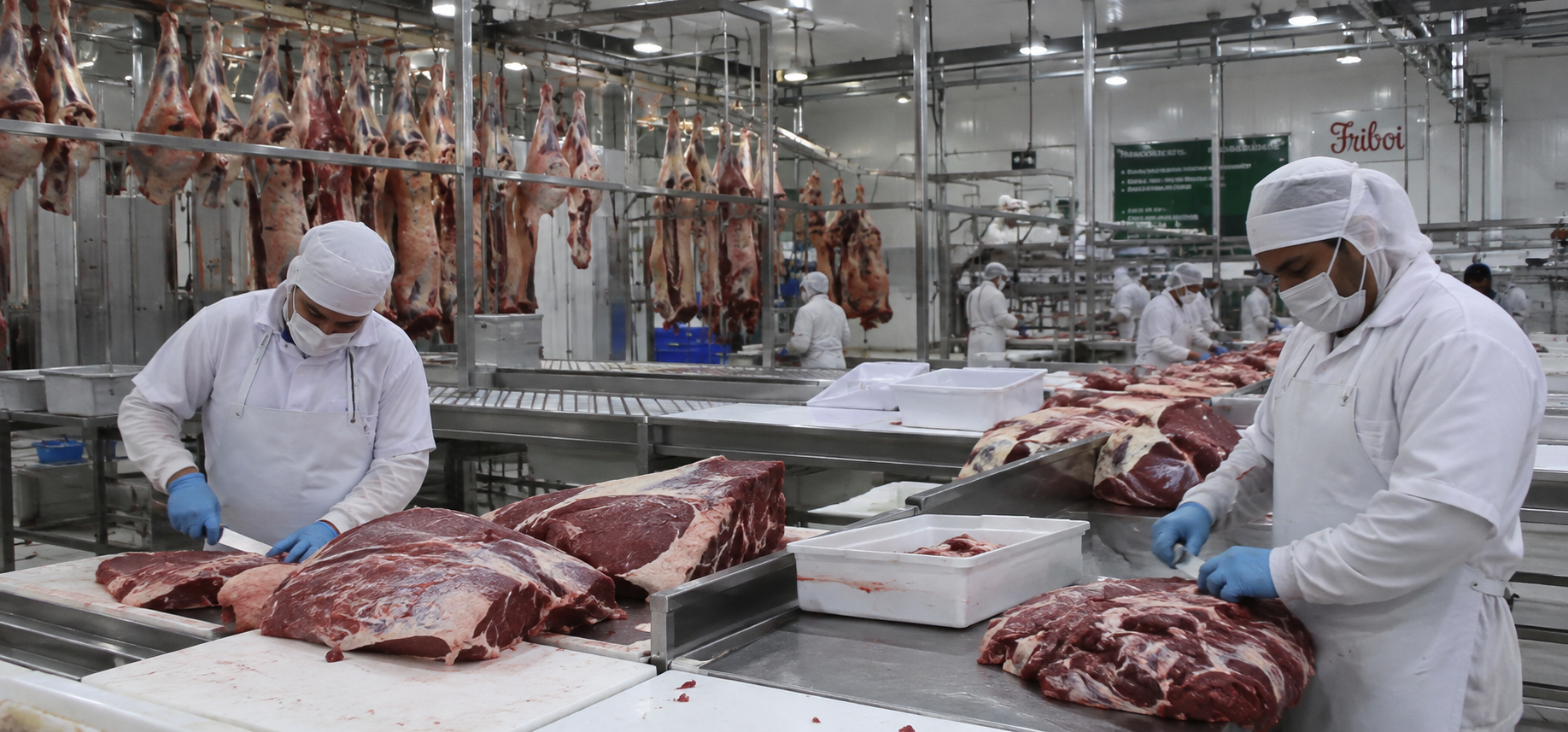
Brazilian beef exports reached a historic level in 2025, increasing 20.9% in volume compared with 2024. China remained the largest destination, while the United States, Chile, the European Union, Russia and Mexico were also important markets.
This expansion creates several challenges for meat exporters:
- Higher daily production and packaging volumes
- More stringent requirements from international buyers
- Consistent package dimensions and sealing quality
- Better protection during refrigerated or frozen transportation
- Lower labor and packaging costs
- Flexible packaging for different cuts and product sizes
For processors supplying supermarkets, distributors, wholesalers and foodservice companies, manual or semi-automatic packaging can become a bottleneck. An automatic thermoforming system provides a more scalable solution.
Packaging Requirements For Brazilian Meat Exporters
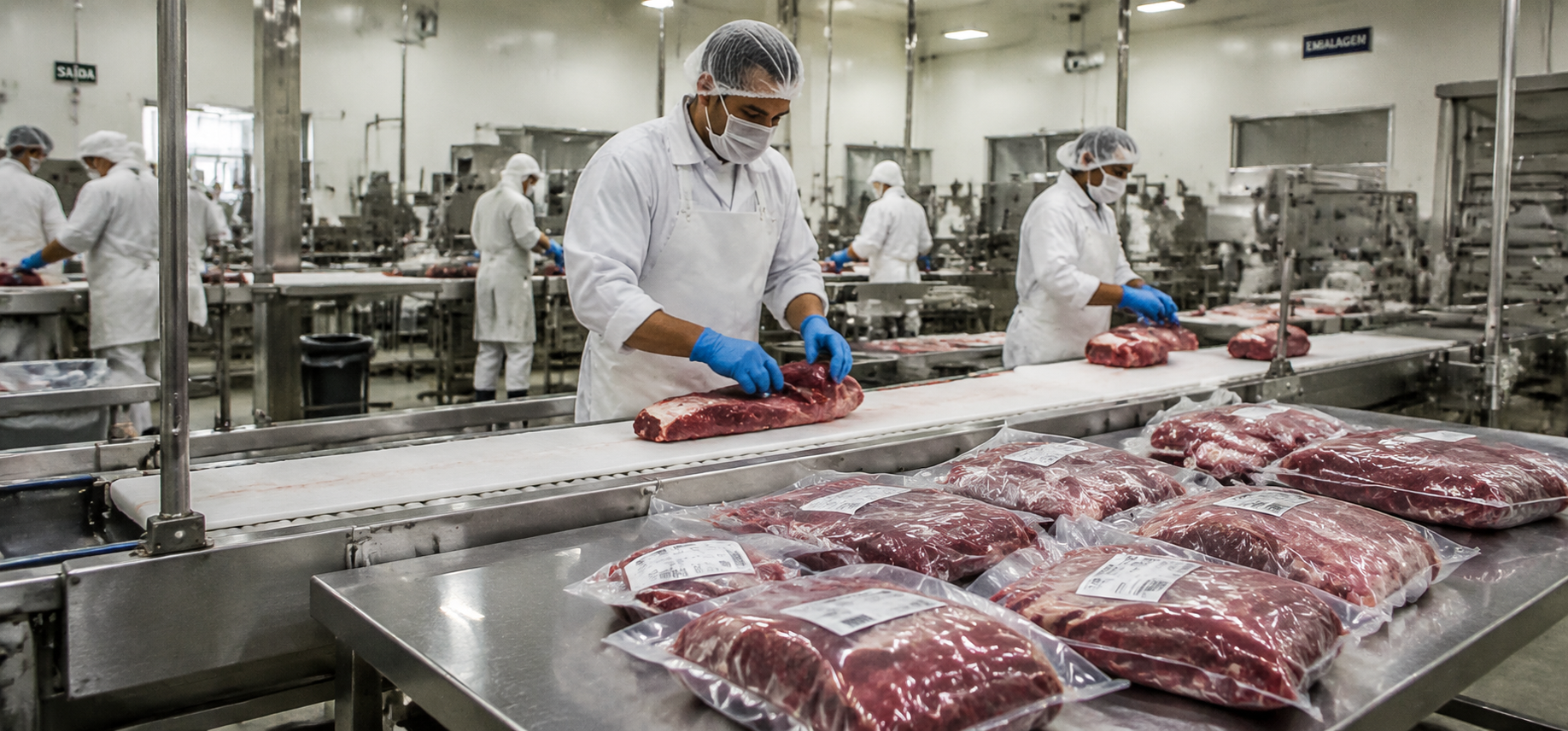
Export meat packaging needs to provide both product protection and process consistency. MAPA regulates and controls exports of animal-origin products, while exporters must also meet the sanitary and import requirements of the destination market. Establishments exporting animal products generally need SIF registration and export authorization through the relevant MAPA/DIPOA procedures.
For packaging operations, meat processors commonly focus on:
1. Reliable Vacuum Protection
Removing air from the package helps reduce exposure to oxygen and supports product protection during refrigerated logistics.
2. Strong and Consistent Sealing
Every package needs stable sealing performance. Poor seals can lead to leakage, contamination risks, rework and product loss.
3. Hygienic Construction
Food-contact areas should be designed for efficient cleaning and maintenance. Stainless-steel construction is widely used in industrial meat packaging environments.
4. Flexible Package Formats
Different export markets may require different portions, dimensions, film structures or package formats. A flexible thermoforming system can be configured around the processor’s products and molds.
5. Traceability and Export Information
Depending on the destination market and product, packaging and labeling may need to accommodate required identification, traceability and regulatory information.
Automatic Production Advantages
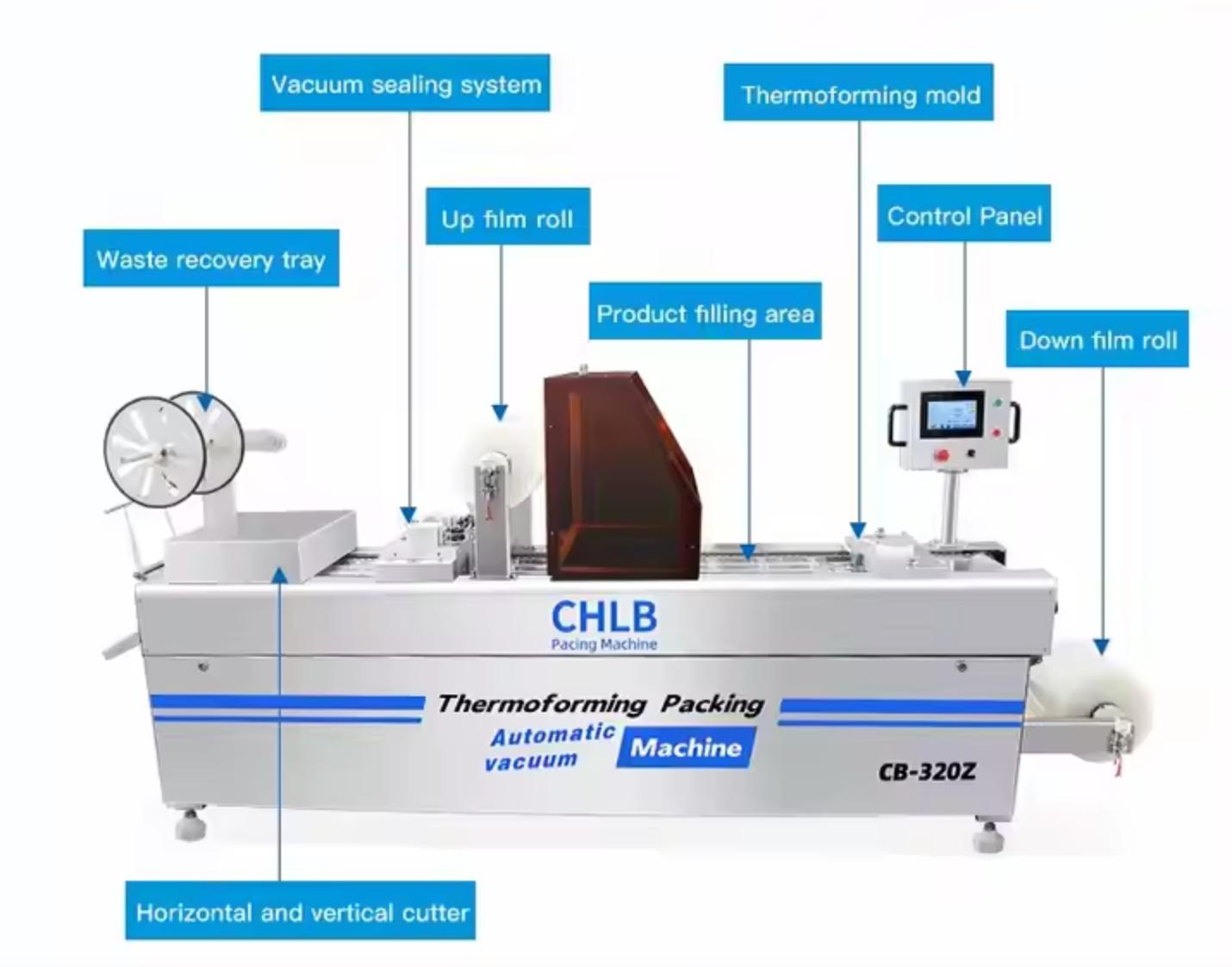
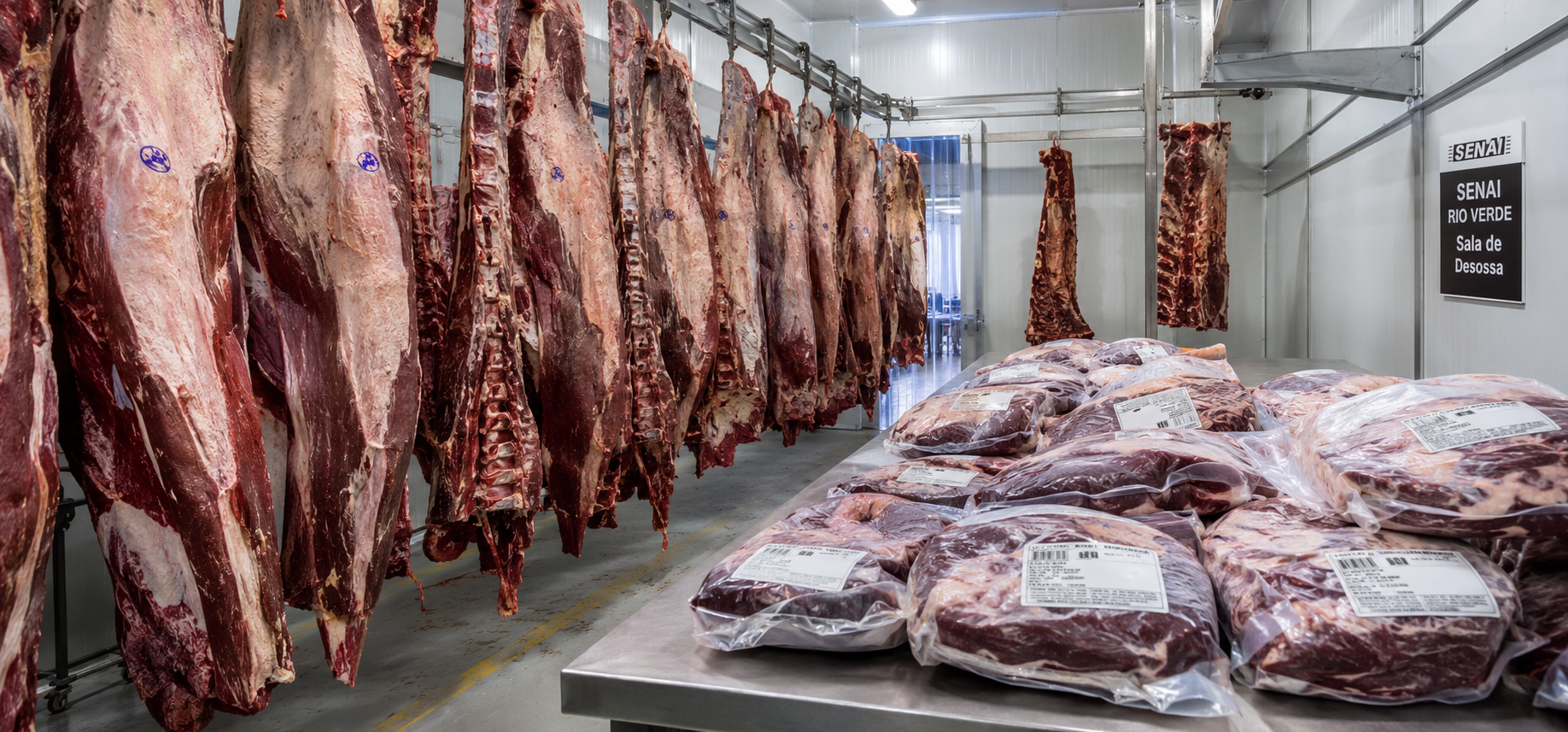
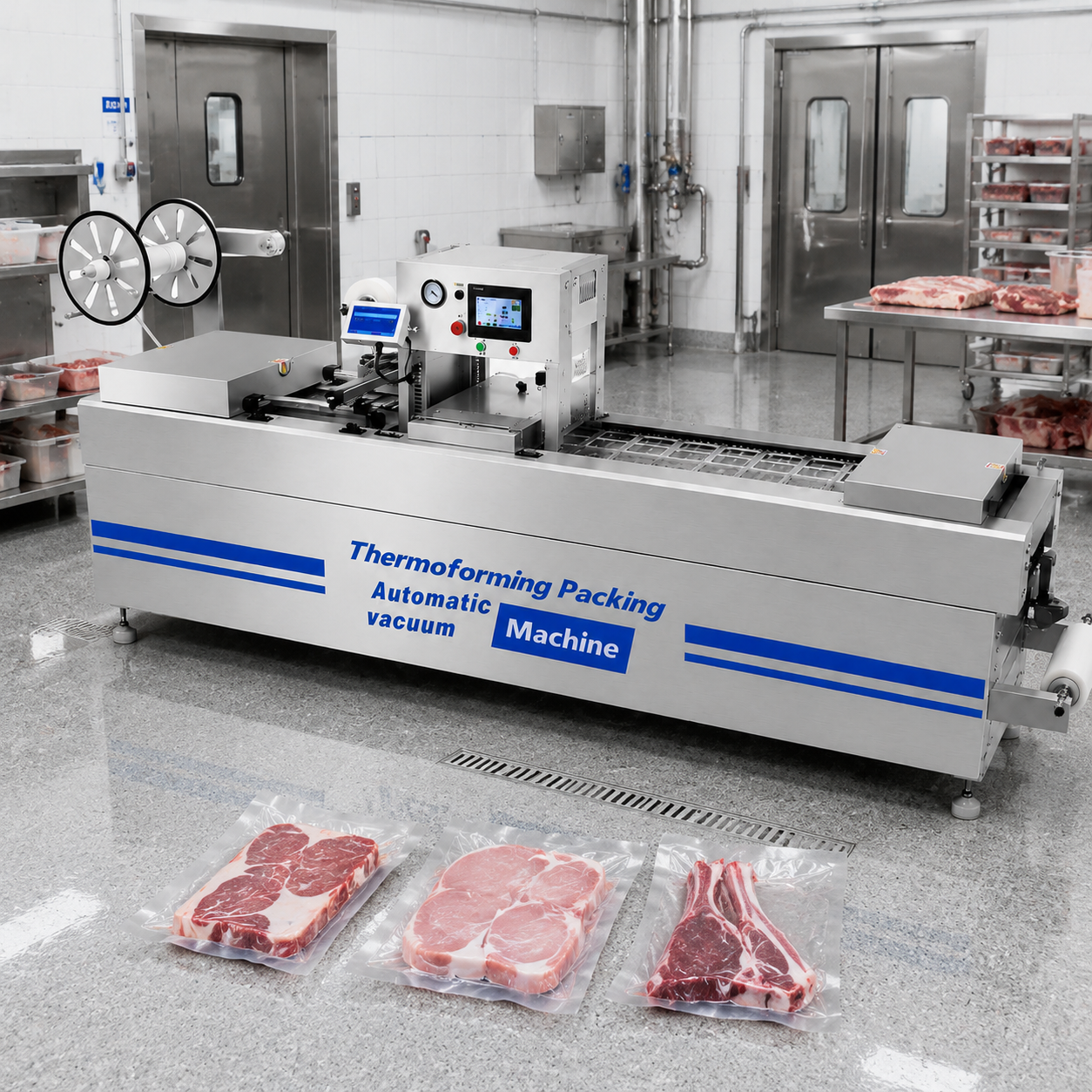
A modern thermoforming vacuum packaging machine combines several packaging operations into one continuous production process.
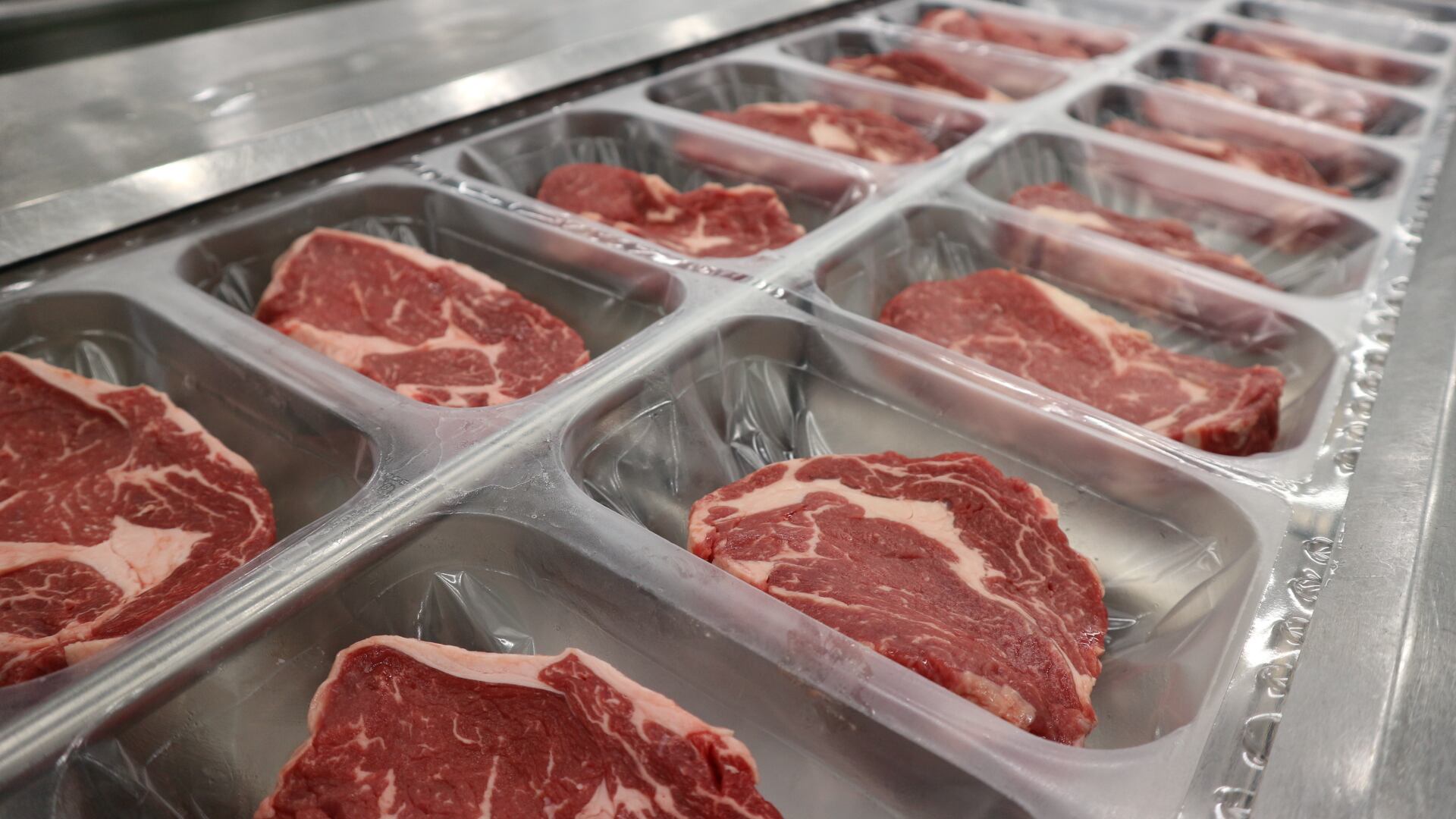
Instead of preparing individual trays manually, the machine uses roll film to automatically form the package, allowing operators to load the meat into formed cavities before vacuum sealing and cutting.
This provides several advantages for Brazilian meat exporters:
Higher throughput: Continuous operation is suitable for high-volume meat processing.
Consistent package size: Custom forming molds help maintain uniform dimensions.
Reduced labor dependency: Automation reduces repetitive manual packaging operations.
Better sealing consistency: Controlled temperature, vacuum and sealing parameters improve package-to-package consistency.
Lower material waste: Roll-stock film can be efficiently formed and cut according to the selected package format.
Easy product changeover: Different molds and parameter settings can support multiple meat products.

How The Machine Works
The complete packaging cycle can be understood through seven main stages:
Film Feeding
↓
Heating
↓
Forming
↓
Filling
↓
Vacuum
↓
Sealing
↓
Cutting
Film Feeding
The machine continuously feeds the bottom forming film and upper sealing film according to the programmed packaging parameters.
Heating
The bottom film is heated to the required forming temperature. Precise temperature control helps maintain stable forming quality.
Forming
The heated film is shaped into customized cavities according to the selected mold. Different molds can be designed for steaks, beef cuts, pork, chicken, sausage, seafood and other products.
Filling
Operators or upstream equipment place the prepared meat products into the formed cavities. Automatic feeding systems can also be integrated according to production requirements.
Vacuum
The machine removes air from the package before sealing. Vacuum parameters can be adjusted according to product characteristics and packaging requirements.
Sealing
The upper film is accurately positioned and heat-sealed to the formed package, creating a reliable barrier around the meat.
Cutting
The finished packages are automatically separated and discharged, ready for inspection, labeling, secondary packing and export logistics.
Cost Saving Analysis
For a large meat-processing plant, packaging cost is determined by more than machine price.
A useful calculation is:
Total Packaging Cost = Labor + Film Consumption + Product Loss + Rework + Maintenance + Downtime
Automation can reduce the labor required for repetitive forming, sealing and cutting operations. More consistent sealing can also help reduce rejected packages and leakage-related rework.
For example, if a production line currently requires several operators for manual tray preparation and sealing, replacing repetitive operations with an automatic meat vacuum packaging machine can reduce labor requirements while increasing production continuity.
The actual return on investment depends on product size, film cost, working hours, labor rates, production volume and machine configuration. Therefore, we recommend calculating ROI using the exporter’s actual production data rather than relying on a fixed industry estimate.
Why Choose Chuanglibao For Your Meat Packaging Solution?
Foshan Chuanglibao Packaging Machine Co., Ltd. was founded in 1998 and specializes in packaging machine R&D, design and manufacturing. The company has its own R&D team and provides customized packaging solutions, including machine modification and production-line design. Its machines have been exported to more than 60 countries.
Customized Engineering
Every meat processor has different products, package dimensions, film materials and production targets. We can customize forming molds, package sizes, machine configuration, film width and production-line integration according to the customer’s requirements.
Food-Grade Machine Construction
The thermoforming packaging solution can be configured with stainless-steel construction and food-processing-oriented components to support demanding meat-processing environments.
CE Certification
Our packaging machines are available with CE certification, supporting customers who require internationally recognized machinery compliance for their markets.
Professional R&D Capability
Our engineering team focuses on machine development, customization and packaging-solution optimization rather than simply supplying standard equipment.
Complete After-Sales Support
We provide machine installation guidance, commissioning support, operation training, troubleshooting assistance and technical support to help customers establish stable production after delivery.
For Brazilian meat exporters looking to increase production capacity, improve packaging consistency and reduce packaging labor, an automatic thermoforming vacuum packaging machine can become an important part of a modern export-oriented production line.
FAQ: Meat Vacuum Packaging Machine For Brazilian Meat Exporters
1. What meat products can the thermoforming vacuum packaging machine handle?
It can be configured for beef, pork, chicken, lamb, sausage, processed meat, seafood and other solid food products.
2. Is the machine suitable for large-scale meat production?
Yes. Its continuous thermoforming structure is designed for automated, high-volume packaging operations, with capacity depending on product size, mold configuration and machine model.
3. Can the package size be customized?
Yes. Forming molds can be customized according to the dimensions, weight and shape of the customer’s meat products.
4. Can it package fresh and frozen meat?
Yes. The machine can be configured for different meat applications, but the film, sealing parameters and package design should be selected according to the specific product.
5. Can the machine use vacuum packaging film?
Yes. The machine uses roll-stock forming and sealing films suitable for thermoforming vacuum packaging.
6. Can different meat products use different molds?
Yes. Multiple mold configurations can be developed for different product sizes and packaging formats.
7. How can vacuum packaging help meat exporters?
Vacuum packaging helps reduce air inside the package and provides a protective sealed package suitable for refrigerated or frozen meat logistics.
8. Can the machine be integrated with other equipment?
Yes. Depending on the production line, it can be connected with conveyors, coding systems, inspection equipment, weighing systems and other upstream or downstream equipment.
9. Can you customize the machine for our Brazilian factory?
Yes. We can evaluate your product samples, package dimensions, film specifications, target capacity and factory layout before proposing the machine configuration.
10. What after-sales support do you provide?
We provide installation guidance, commissioning, operation training, technical troubleshooting and spare-parts support to help customers maintain stable production.