Meta Title: Industrial Vacuum Skin Packaging Machine for Seafood
Meta descripción: Discover how an industrial vacuum skin packaging machine improves fish presentation, packaging consistency, material efficiency, and seafood export preparation.
URL Slug: /industrial-vacuum-skin-packaging-machine-seafood/
Palabra clave principal: Industrial Vacuum Skin Packaging Machine
Secondary Keywords: Seafood Vacuum Skin Packaging Machine, Fish Vacuum Skin Packaging Equipment, Salmon Skin Packaging Machine, Vacuum Skin Packaging for Fresh Fish
Introducción
Seafood processors face packaging challenges that differ from those of many other food manufacturers. Fresh salmon, bacalao, tuna, filetes de pescado, and premium seafood cuts vary in thickness, forma, surface moisture, y textura. During packaging, products may shift, delicate edges can be damaged, and excess liquid or poorly fitted film can affect the finished appearance.
For seafood exporters and large fish processing plants, packaging must do more than enclose the product. It should support consistent presentation, reliable sealing, efficient handling, and the requirements of the intended distribution channel.
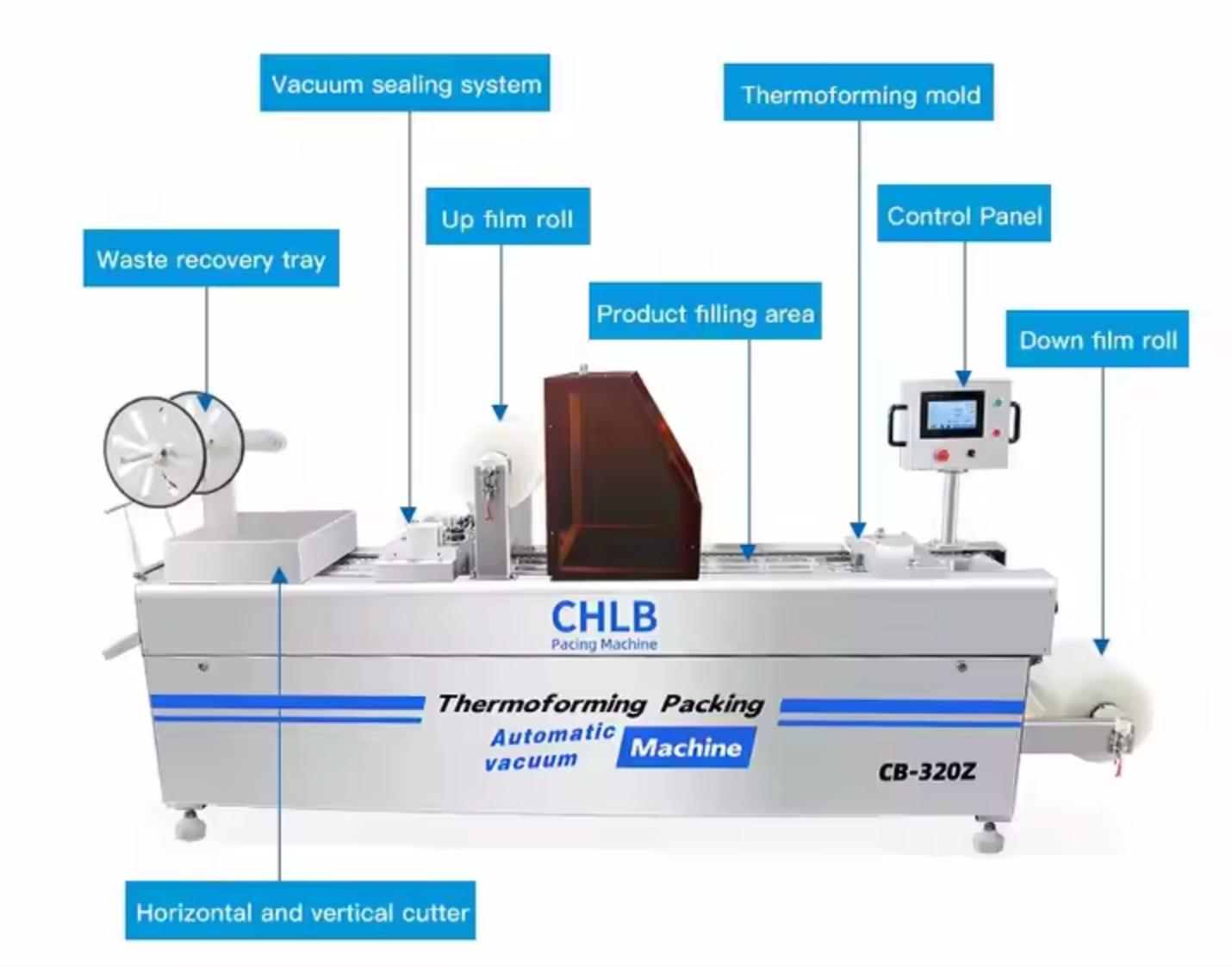
An Industrial Vacuum Skin Packaging Machine uses a specially designed upper film that conforms closely to the product surface and compatible tray. Compared with loose packaging, vacuum skin packaging can create a neat, close-fitting appearance that helps showcase fish texture and color.
For high-volume processors, the right system can also support standardized packaging across different product sizes and production batches.
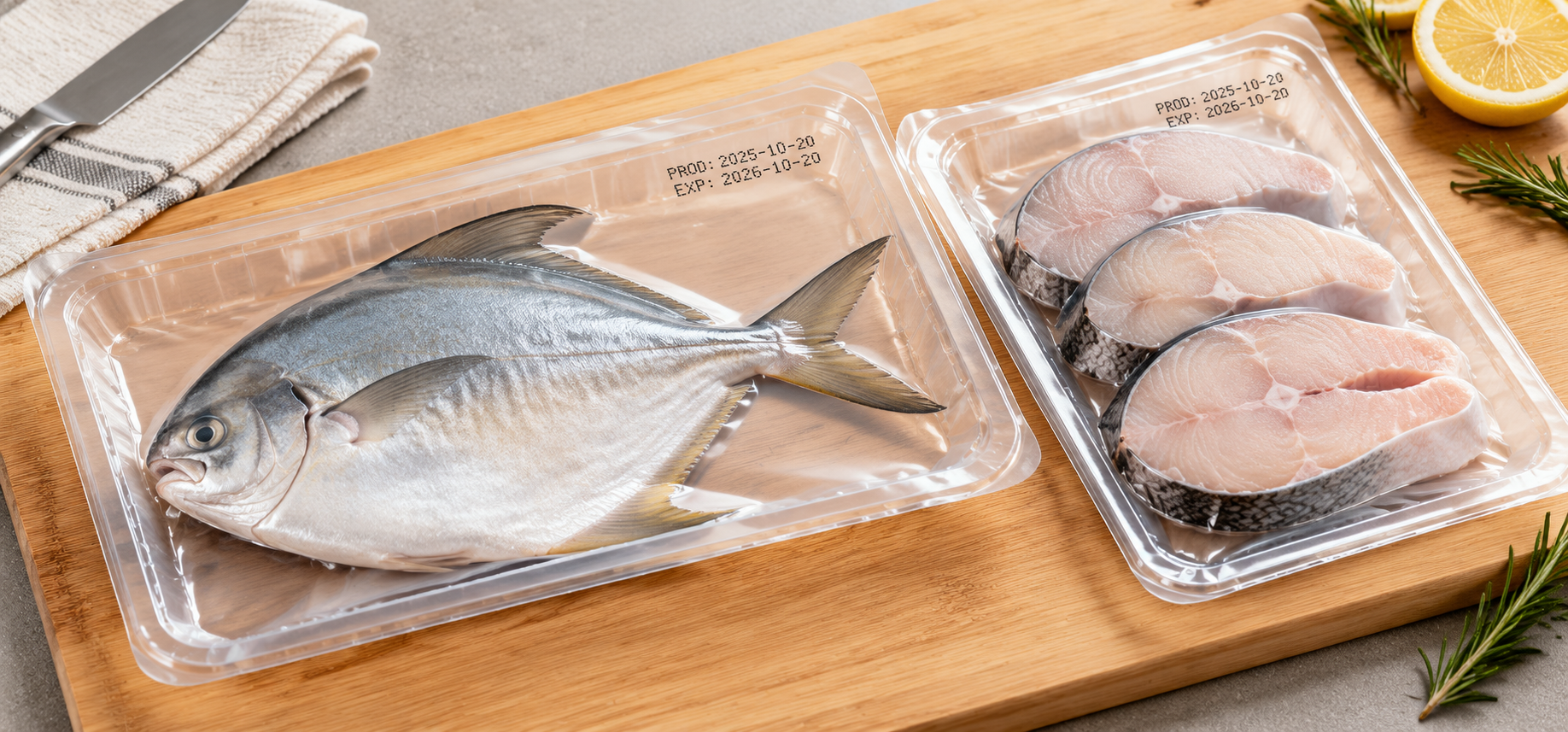
1. Why Seafood Needs Specialized Packaging Solutions
Unlike uniform solid products, fish portions are often delicate, irregular, and moisture-sensitive. Salmon fillets may have tapered edges, cod portions can vary in thickness, and premium tuna cuts require careful handling to maintain their appearance.
Common packaging challenges include:
- Irregular product shapes: Loose film may create folds or excessive empty space.
- Surface moisture: Residual water or fish exudate can interfere with film contact and sealing.
- Product movement: Poor package fit may allow portions to shift during handling.
- Inconsistent presentation: Different sizes and manual operations can produce uneven retail packs.
- High-volume orders: Labor-intensive packaging can slow production and increase operating costs.
A Seafood Vacuum Skin Packaging Machine helps address these issues by drawing a suitable top film closely around the product. When the film, bandeja, and process conditions are properly matched, the result can be a cleaner and more uniform package.
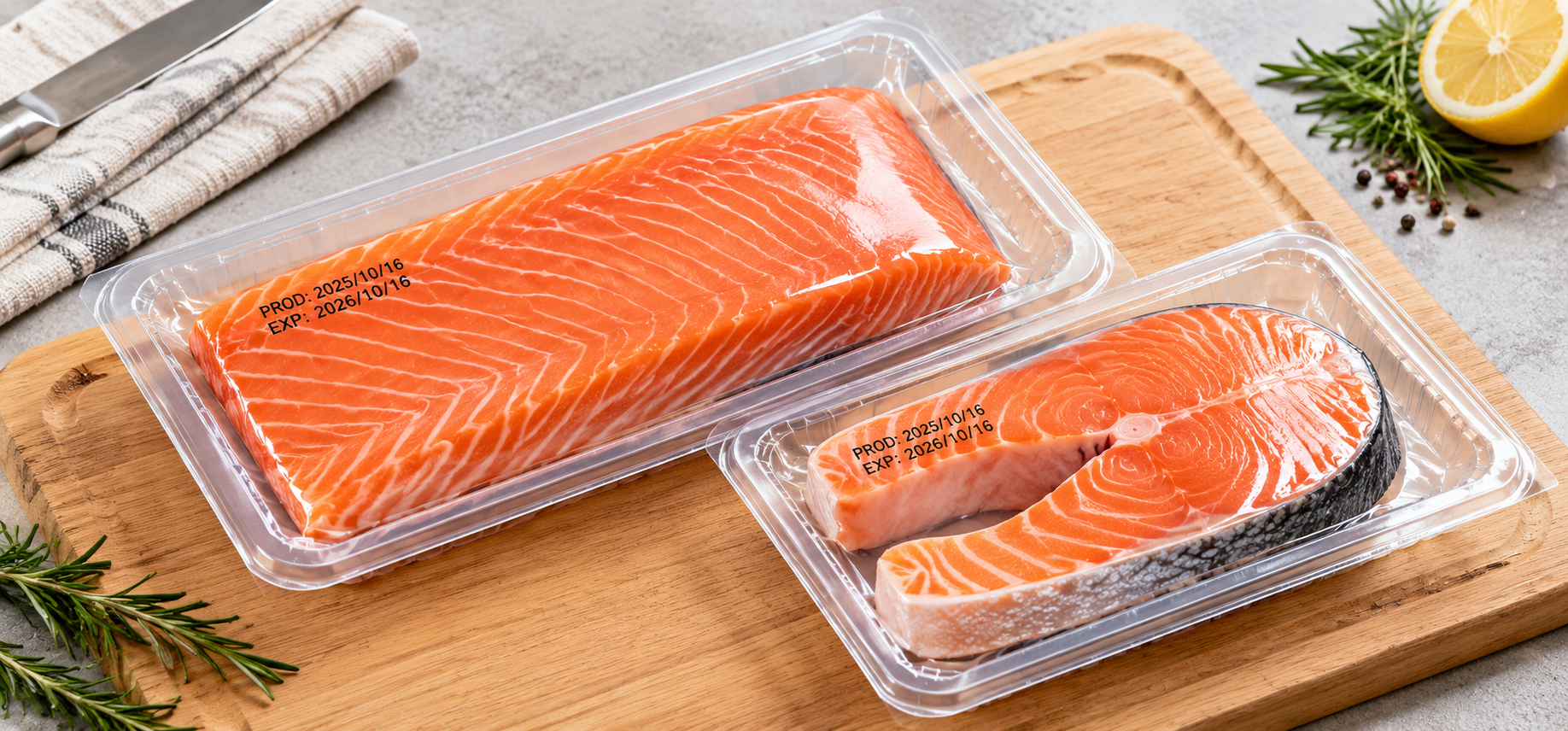
2. How Vacuum Skin Packaging Improves Fish Presentation
Vacuum skin packaging is designed to make the upper film follow the contours of the fish and the supporting tray. This close-fitting structure can reduce unnecessary space above the product and improve visibility for retail customers.
Salmon Fillets and Premium Fish Cuts
A Salmon Skin Packaging Machine can be used for suitable salmon portions, fillets, and other premium cuts. Transparent film allows buyers to see the product’s color, textura, and natural appearance.
For seafood brands and supermarkets, this can help differentiate premium products and create a more organized shelf presentation.
Cod, Tuna, and Mixed Fish Portions
Different fish species have different thicknesses, formas, and surface characteristics. With appropriate tooling and packaging materials, a vacuum skin packaging system may accommodate multiple product formats.
Before production, processors should test representative products to confirm film conformity, package appearance, y rendimiento de sellado.
Better Package Uniformity
Automated film handling, vacuum processing, caza de focas, and cutting can reduce variation between packages. Consistent tray positioning and validated operating parameters are especially valuable when processors handle large batches for retail or export customers.
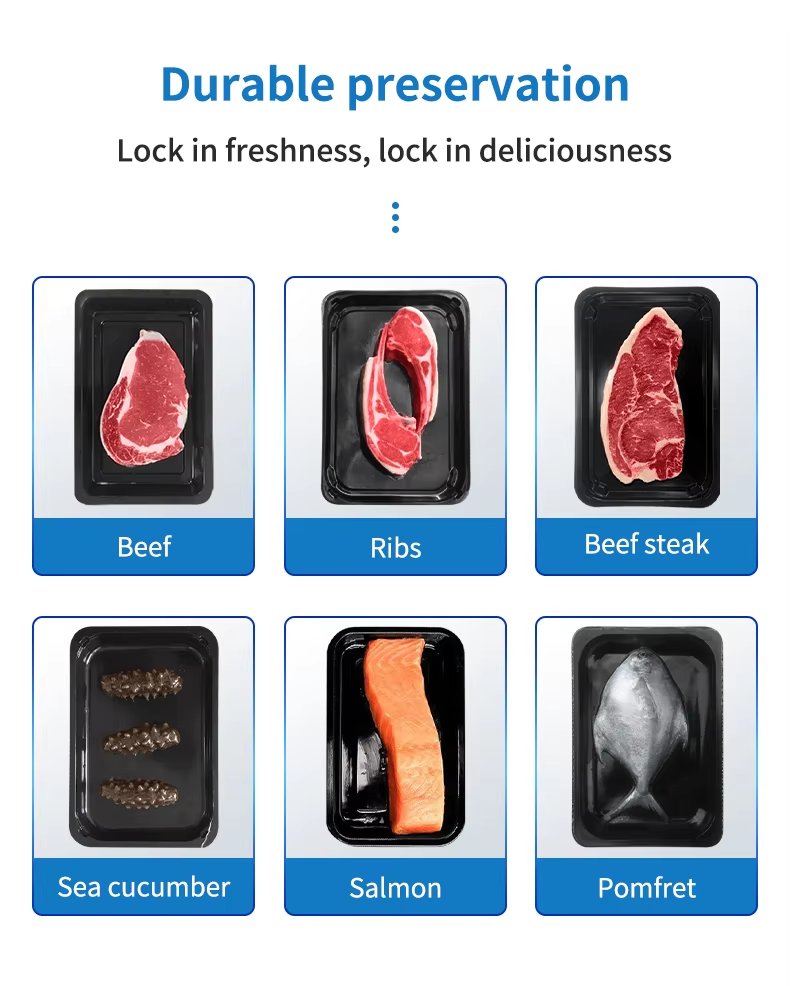
3. Choosing the Right Film for Fresh Fish
Film selection is one of the most important factors in vacuum skin packaging. A film that works well for one salmon portion may not perform equally well with thicker cod cuts or products with uneven edges.
Consider these factors when selecting packaging materials:
- Product thickness: The film must accommodate the height and contour of the fish.
- Edge shape: Thin tails, tapered fillets, and uneven cuts may require careful forming trials.
- Surface moisture: Excess water or liquid should be managed according to the validated process.
- Film properties: Formability, transparency, barrier performance, and sealing compatibility all matter.
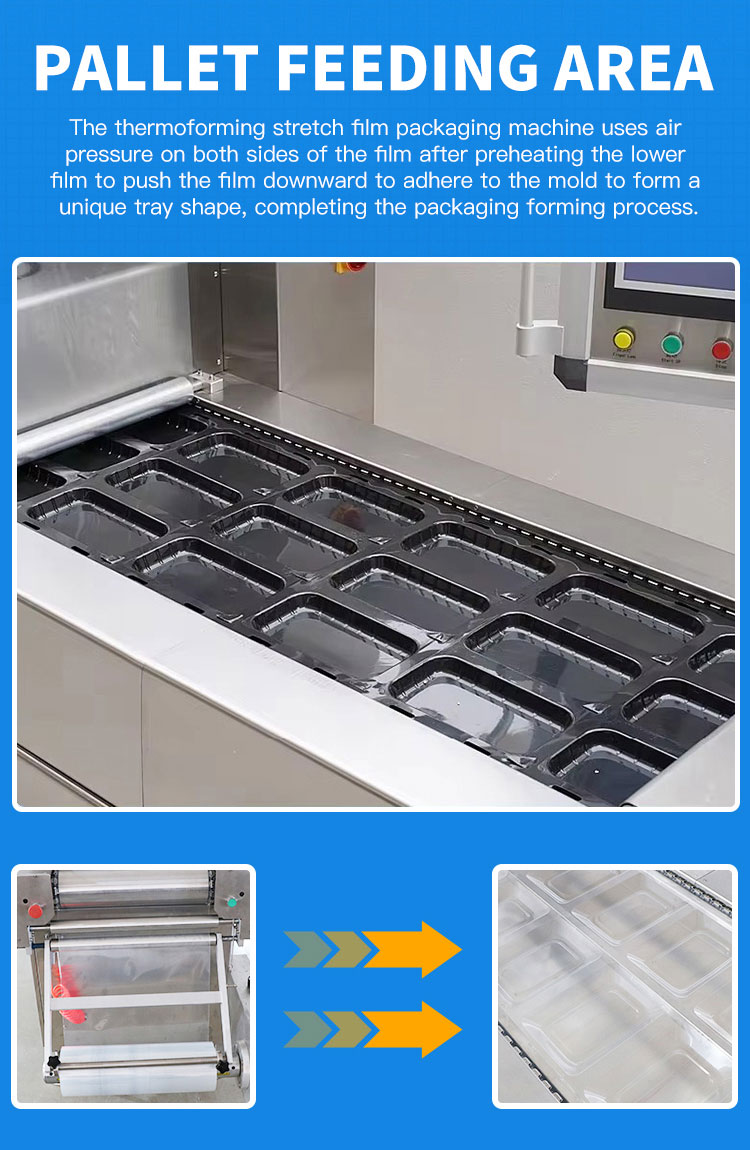
- Tray compatibility: Tray material, profundidad, rigidity, and sealing surface must match the film and machine.
Vacuum skin packaging is not a substitute for proper fish handling or hygiene. Product temperature, surface preparation, material specifications, and process settings should be evaluated together.
4. Why Large Seafood Plants Need Industrial Equipment
For large fish processors and seafood exporters, equipment selection must consider daily output, product variety, and production continuity.
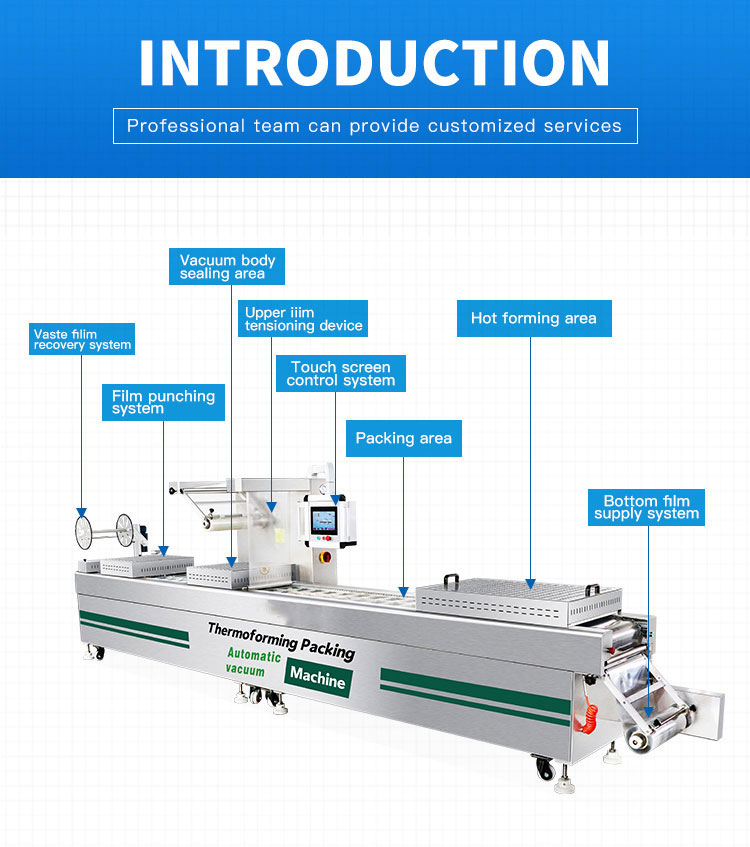
Industrial Fish Vacuum Skin Packaging Equipment should be evaluated for:
- Capacidad de producción: Confirm actual packages per hour using representative fish products.
- Automatic film handling: Reduce repetitive manual work and support consistent operation.
- Customized molds: Match tray dimensions and product arrangements.
- Format flexibility: Assess changeover time when switching between salmon, bacalao, tuna, and other portions.
- Quality control: Maintain repeatable vacuum, formación, and sealing conditions.
- Film waste management: Evaluate trimming systems and material utilization.
A higher nominal machine speed does not automatically mean higher output. Loading time, tray arrangement, product positioning, changeovers, and downstream handling also affect overall line efficiency.
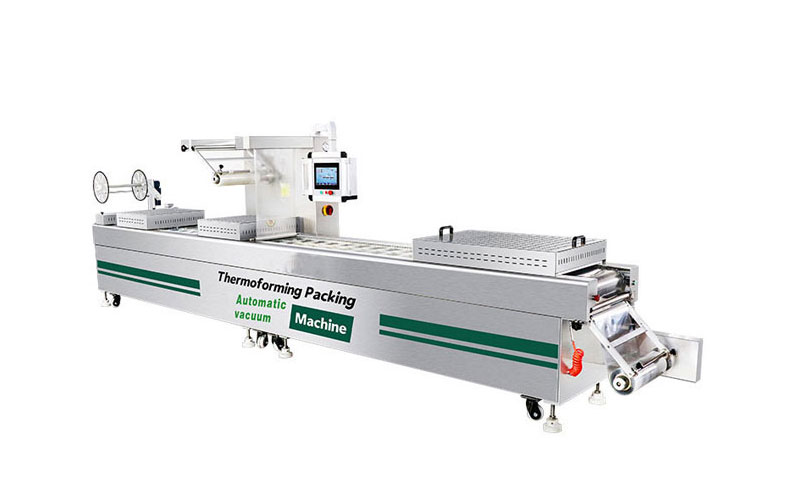
5. Applications in Seafood Processing and Export
Customer TypeTypical ProductsMain PrioritiesSalmon processing plantsSalmon fillets and portionsProduct visibility and consistent presentationFish cutting factoriesCod, tuna, and mixed fish cutsFlexible formats and stable sealingSeafood exportersPremium fish portionsUniform packs and transport preparationChilled seafood suppliersFresh fish and retail portionsClean appearance and handling efficiencyLarge food distributorsMultiple seafood formatsStandardization and reliable supply
For businesses serving Norway, Denmark, Iceland, the UK, the Netherlands, España, Canadá, and Chile, packaging decisions should reflect the product, destination market, customer specifications, and applicable food-contact and labeling requirements.
6. How to Select an Industrial Vacuum Skin Packaging Machine
Before requesting a quotation, define the actual production requirements rather than choosing equipment based on price alone.
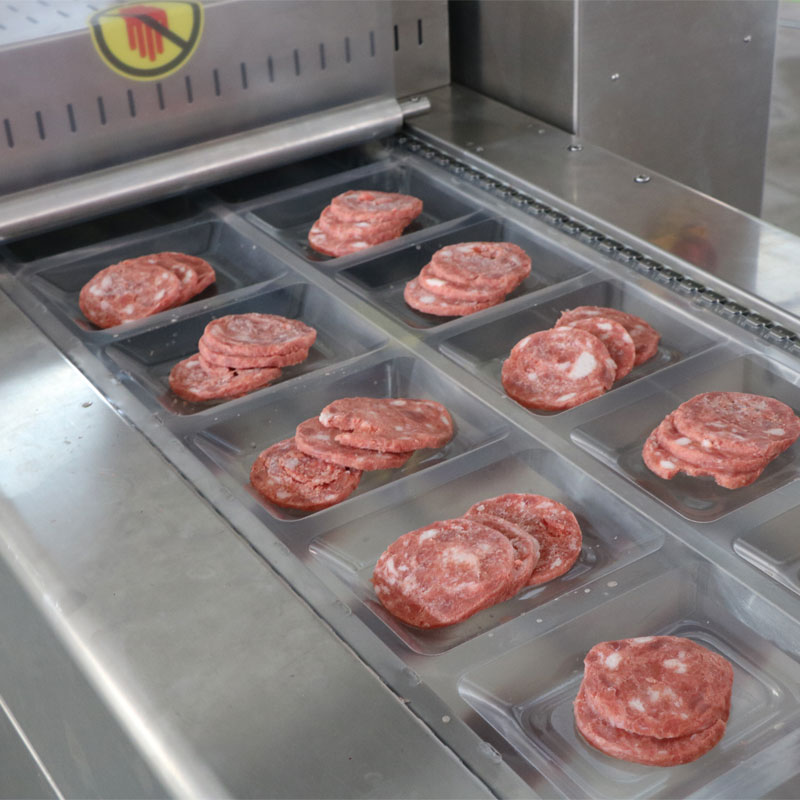
Product specifications: Provide the fish species, maximum portion dimensions, thickness range, and whether products are skin-on, skinless, or irregularly shaped.
Tray and film: Share tray drawings, material details, especificaciones de la película, and the preferred finished package appearance.
Target output: Estimate required packages per hour, daily volume, shift pattern, and expected future demand.
Changeover requirements: If you process several species or portion sizes, ask about mold replacement, parameter adjustment, and trial procedures.
Service and support: Consider installation, operator training, piezas de repuesto, and technical assistance for your location.
A practical packaging trial using actual fish samples is the best way to assess film conformity, package quality, achievable output, and material suitability.
7. Balancing Packaging Costs, Protección, and Efficiency
The lowest-cost film or the fastest advertised machine may not provide the best overall return. Seafood processors should evaluate total packaging cost alongside product presentation and production performance.
Compare film consumption per pack, tray cost, desperdiciar, labor requirements, tiempo de cambio, rejected packages, mantenimiento, and saleable output.
Close-fitting packaging may improve package organization and reduce unnecessary space above the product. Sin embargo, transport protection and cold-chain performance depend on the complete package design, carton configuration, handling conditions, and storage temperature.
The goal is to select a packaging solution that consistently meets customer specifications while supporting efficient production and dependable distribution.
Get a Customized Seafood Packaging Solution
Every fish processing plant has different products, tray formats, and production targets. To evaluate a suitable Industrial Vacuum Skin Packaging Machine, prepare your fish dimensions, tray specifications, film requirements, and target output.
Send product photos or samples to help assess the packaging format and required tooling.
Looking for a Seafood Vacuum Skin Packaging Machine for salmon, bacalao, tuna, or fresh fish? Contact our team to discuss your products and production requirements. We can help evaluate a suitable machine configuration for your seafood packaging operation.
Preguntas frecuentes
1. What seafood products can a vacuum skin packaging machine handle?
Depending on the machine configuration and packaging materials, suitable products may include salmon fillets, cod portions, tuna cuts, and other fish products packed on compatible trays.
2. Can vacuum skin packaging reduce empty space around fish?
It can reduce unnecessary space between the upper film and the product by allowing the film to follow the fish’s contours. The final result depends on product shape, tray design, and film properties.
3. How does surface moisture affect packaging?
Excess moisture can affect film contact, apariencia, y rendimiento de sellado. Product preparation and operating conditions should be tested and standardized for the specific fish product.
4. Can one machine package different fish sizes?
Many industrial systems can support different formats through suitable molds and parameter adjustments. The available range depends on the machine model and tooling design.
5. Is vacuum skin packaging suitable for seafood exports?
It can be suitable when the packaging materials, sealing process, product handling, and preservation requirements meet the exporter’s specifications and destination-market regulations.
6. What information is needed for a machine quotation?
Provide fish type, product dimensions, tray size, target output, especificaciones de la película, power supply, and destination country. Product samples or drawings are helpful for evaluating the proposed solution.