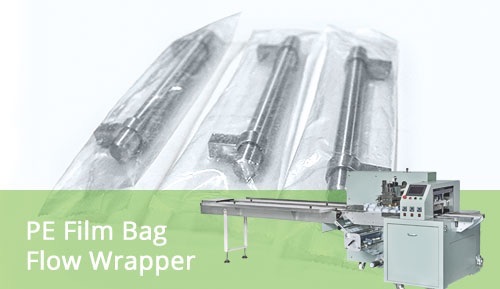
If you have ever stood over a stalled packaging line, you know the frustration. Often, the culprit is not a faulty sensor or a mechanical failure. Instead, it is a fundamental mismatch between your machinery and your chosen packaging format.
Whether you invest in roll stock packaging or pre-made pouches will dictate your daily output, labor costs, and profit margins. At CHLB, we believe your line should be the heartbeat of your facility and not a bottleneck. This guide explores the technical and financial realities of both options to help you scale efficiently.
Differences Between Roll Stock vs. Pouches
Think of roll stock as buying raw fabric to sew your own clothes, while pre-made pouches are like buying a finished outfit ready to wear. With roll stock, your machine does the heavy lifting of forming the container. With pouches, the work is done upfront by a supplier, leaving your machine to focus solely on filling.
| Feature | Roll Stock (Film) | Pre-made Pouches (Bags) |
|---|---|---|
| Forming Process | Machine forms the bag in-line. | Bags arrive pre-formed and ready to fill. |
| Material State | A continuous “web” of plastic or foil. | Individual units stacked in a magazine. |
| Production Speed | High (60–120+ packs per minute). | Moderate (20–60 units per minute). |
| Cost per Unit | Lowest (raw material pricing). | Higher (includes converter labor). |
| Operational Control | Full control over bag length. | Fixed dimensions and features. |
| Warehouse Space | Maximum density; minimal storage. | Bulky; takes up 5–10x more space. |
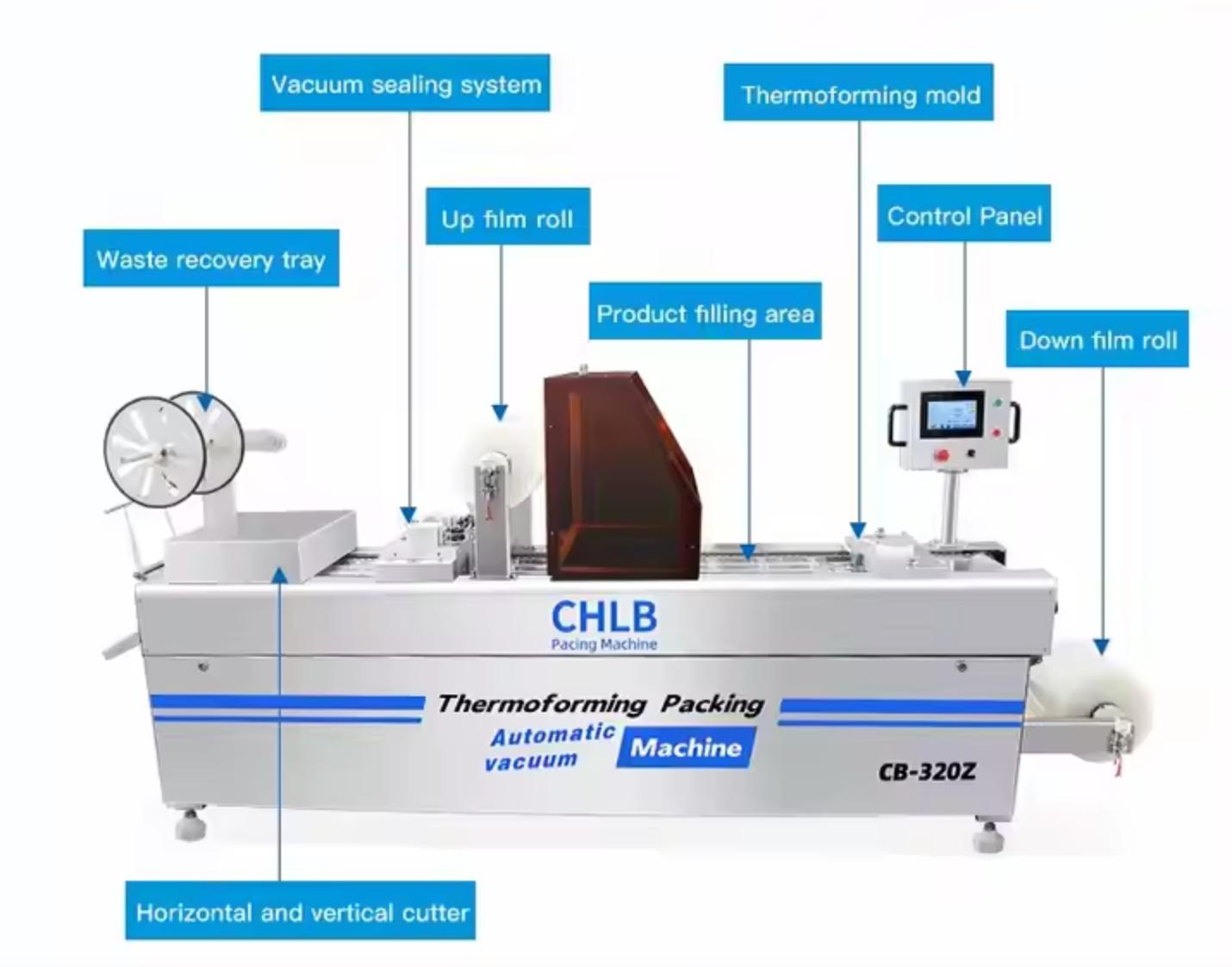
Using roll stock packaging requires a Vertical Form Fill and Seal (VFFS) or Horizontal Form Fill and Seal (HFFS) machine. These units transform flat film into a tube, seal the bottom, drop in your food, and close the top. Conversely, pouch-filling machines are focused on mechanical handling. They open and close finished bags. This difference dictates how you spend your labor hours and manage your daily output.
Why Roll Stock Is the Go-To for Rapid Scaling
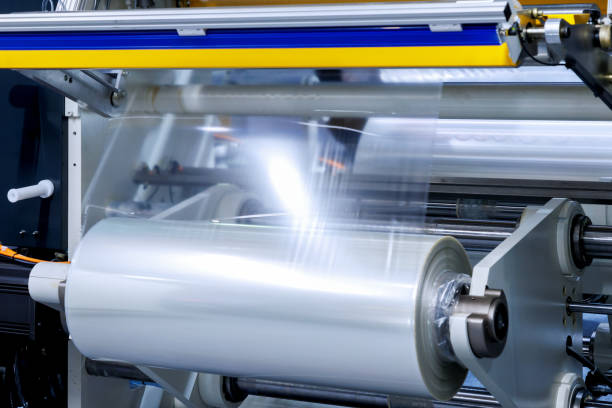
If you are processing 80 or 100 units per minute, roll stock packaging is the gold standard. High-volume production demands a setup that never slows down and keeps costs as low as possible. When you reach this level of output, every second saved is a victory for your bottom line.
Unbeatable Unit Economics
Buying film in rolls is simply the most efficient way to source packaging. Since you are not paying a converter to fold and seal the bags for you, your material cost is typically 25% to 35% lower. For a line running 50,000 units a day, those tiny savings per bag turn into thousands of dollars in your pocket every month. It is the most direct way to boost your gross margins.
Superior Machine Throughput
Modern VFFS machines are engineered for continuous motion. Because the film moves over a forming shoulder without the machine needing to “stop and grab” a bag, you hit much higher cycles per minute (CPM). It is common for dry snack or nut producers to reach speeds of 120 bags per minute with ease. You are not limited by how fast a mechanical hand can move; you are only limited by how fast your product can drop into the bag.
Integrated Automation and Freshness
Roll stock systems integrate perfectly with industrial weighers and dosing tools. Beyond speed, these machines are better for food safety. Most VFFS systems can pump Nitrogen gas directly into the forming tube during the fill. This flushes out oxygen and locks in freshness, which is a critical feature for anyone selling perishable snacks or coffee who needs a long shelf life.
Why Pre-made Pouches Often Win for Smaller Product Runs
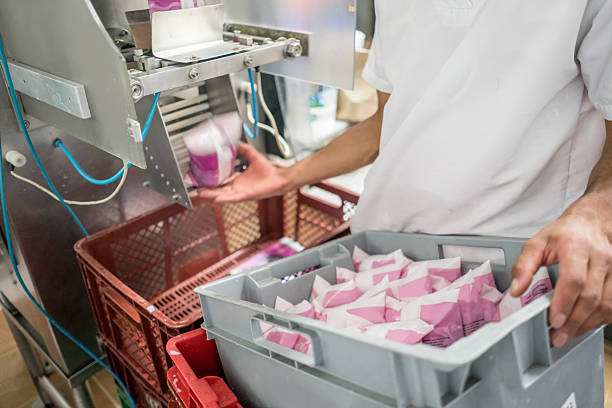
For brands prioritizing premium retail aesthetics or managing a high volume of diverse SKUs, pre-made pouches offer the agility and quality needed to capture specialized markets. They provide a level of shelf-ready quality that is difficult to replicate with automated film rolls during shorter production cycles.
Minimal Technical Setup
Running a pouch-filling machine is straightforward. You do not have to worry about the physics of a forming shoulder or keeping a film roll perfectly centered. The machine simply picks up a bag and fills it. This makes it much easier to train your staff. You will not need an expensive, specialized technician on-site just to keep the machine running smoothly every hour.
Premium Aesthetic Quality
Pre-made pouches are built in highly controlled specialized facilities. The result is a bag with perfectly uniform seals and a very stable stand-up gusset. If you are selling a high-end bag of artisanal granola, that “perfect” shelf presence is worth the extra cost. Consumers tend to perceive a pre-made stand-up pouch as a higher-quality product than a simple pillow bag.
Agility for Diverse SKUs
If your brand lives on variety, such as twelve different seasonal flavors, pre-made pouches are your best friend. Switching from one design to another takes minutes because you just swap the bags in the magazine. With roll stock packaging, a changeover is a major event where you have to haul off a heavy roll, load a new one, and recalibrate sensors. For small batches, that downtime is a profit killer.
How to Balance Equipment Costs Against Price Per Pouch
Your strategy is where your engineering needs meet your financial goals. Looking at the total cost of ownership rather than the sticker price of the machine is the only way to determine your true success.
| Metric | Roll Stock Setup | Pre-made Pouch Setup |
|---|---|---|
| Initial Machine Cost | High ($50,000 – $150,000) | Moderate ($25,000 – $80,000) |
| Material Cost (Avg.) | $0.04 per unit | $0.16 per unit |
| Labor Skill Needed | High (Technical) | Moderate (Standard) |
| Setup Waste | 2–5% (Alignment) | Less than 1% |
Consider a scenario where you produce 500,000 units per year. At $0.16 per pre-made pouch, your annual material cost is $80,000. Switching to roll stock packaging at $0.04 per unit drops that cost to $20,000. Even if the roll stock machine costs you an extra $40,000 upfront, you recover the investment in less than nine months.
However, if your annual volume is only 50,000 units, the lower initial cost of the pouch filler makes it a more sensible financial choice. The general industry rule is that once your production exceeds 300,000 units annually, roll stock becomes the more profitable option.
Equipment Requirements for Each Packaging Format
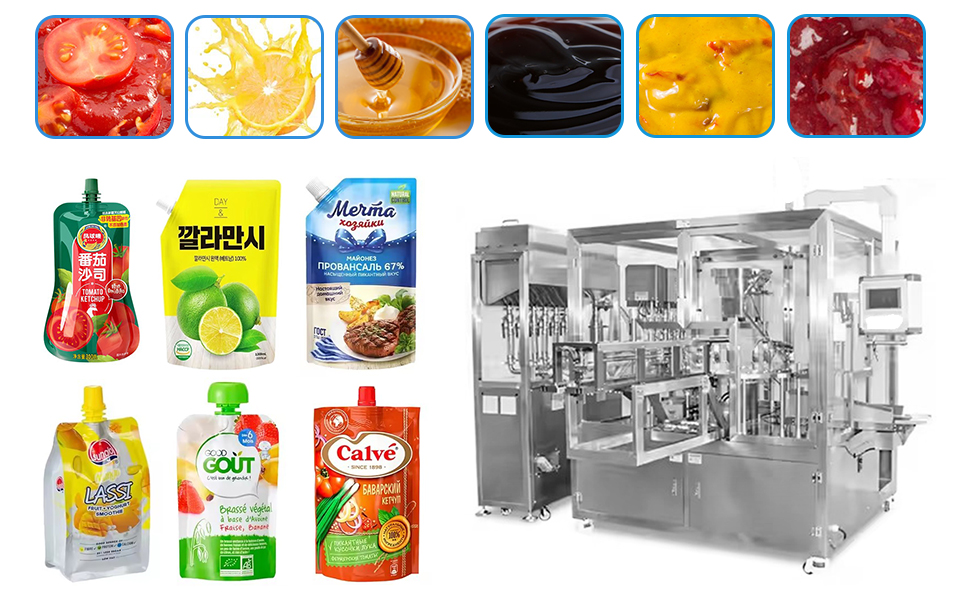
The machinery required for these two formats differs significantly in footprint and mechanical operation. At CHLB, we analyze facility constraints like ceiling height and floor space before recommending a specific system.
Roll Stock Equipment (VFFS/HFFS)
These machines handle the transformation of raw film into a three-dimensional package. They are complex but incredibly efficient once calibrated.
- Forming Shoulder: A precision-engineered metal component that folds the film into a tube.
- Film Pulling System: These use friction or vacuum belts to move the film with millimetric accuracy.
- Constant Heat Sealers: Depending on your material, the machine uses specific heat technologies to ensure the bag never leaks.
- Eye-mark Sensors: These sensors read the film to ensure the graphics are cut in exactly the right spot every time.
Pre-made Pouch Equipment
These machines operate by moving each individual bag through different stations. They do not form the bag; they simply manage the existing material.
- Vacuum Magazines: Suction cups pick the bags from a stack and place them into mechanical grippers.
- Opening Mandrels: These physical tools enter the bag to ensure it is fully expanded before the product is dropped.
- Zipper Openers: If your pouch has a re-closable feature, a specific tool must pop the zipper open during the cycle.
- Dust Extraction: Extraction systems keep the seal area clean so the bag stays closed during shipping.
Logistics and Storage for Rolls vs Bags
A crowded warehouse is a quiet profit-killer. Efficiency in storage translates directly to savings in your monthly overhead and inbound freight.
The Density and Resilience of Roll Stock Packaging
Roll stock packaging is incredibly efficient. A single pallet of film can produce tens of thousands of bags. Since it is flat and wound tightly, you are shipping solid material and not empty pockets of space. This high density allows you to store a six-month supply in a small footprint and keeps your inbound freight costs low.
Furthermore, roll stock is highly resilient during transport. The outer layers of a roll protect the film inside from moisture and physical scuffs. Unlike pre-made bags, roll stock is not prone to crushing. You eliminate the risk of the material developing permanent creases or damaged corners during shipping, which drastically reduces your reject rates.
The Bulkiness and Fragility of Pre-made Pouches
Pre-made pouches are much bulkier and more susceptible to damage. The inclusion of zippers, gussets, and multiple layers of pre-sealed plastic means that a box of 1,000 pouches takes up significant volume. When you use pouches, you are essentially paying to ship and store small pockets of air between the layers of bags.
Pouches are also more susceptible to box crush. Bags at the bottom of a heavy carton can easily develop permanent creases. These defects often prevent the bag-opening sensors from working correctly, leading to machine downtime and wasted product.
How to Choose Between Roll Stock vs. Pouches
Here is a checklist for making a choice that supports your long-term growth.
Check Your Volume
If your monthly production is consistently above 30,000 units, stop buying pre-made bags. You are losing money on every pouch. The material savings from roll stock packaging will fund your next machine or your next marketing campaign. If your volume is lower, the flexibility of pouches is worth the higher per-unit price.
Check Your Variety
If you run the same product all week, go with roll stock. The speed and cost efficiency are unbeatable. If you run multiple flavors or sizes every single day, the simplicity of a pouch filler will save you from constant changeover headaches.
Check Your Brand Positioning
If you are selling a high-priced luxury food item, the visual perfection of a pre-made pouch might be necessary for your retail success. For standard snacks, frozen foods, or grains, roll stock provides a clean, industrial look that consumers trust.
Final Thoughts
If you are a growing brand testing the waters with a premium retail look, pre-made pouches are a low-risk, high-impact entry point. They let you focus on your product quality while your volumes are still finding their footing. However, once you have a proven winner and are ready to dominate the market, roll stock is the machine that builds real wealth by slashing unit costs and maximizing speed.
As a professional food packaging equipment manufacturer, CHLB provides high-quality food packaging machines across multiple categories, including high-speed VFFS systems and versatile pouch fillers. With deep R&D experience, we deliver reliable, precise automation that minimizes downtime. Our focus is on engineering excellence and dedicated service, helping you transform your packaging line into a scalable competitive advantage.
Ready to slash your packaging costs and optimize your production floor? Contact us today to request a technical specification sheet and see exactly how our food packaging machines fit your facility layout.