Frozen food packaging plays a vital role in keeping products safe, frisch, and visually appealing from factory to freezer. Whether you’re a manufacturer, distributor, or simply curious about how your favorite frozen meals stay perfect, understanding packaging materials and performance is essential.
In diesem Ratgeber, we’ll explore the common frozen food packaging materials and help you choose the best fit for your needs. Lassen Sie uns eintauchen!
Why Frozen Food Packaging Matters
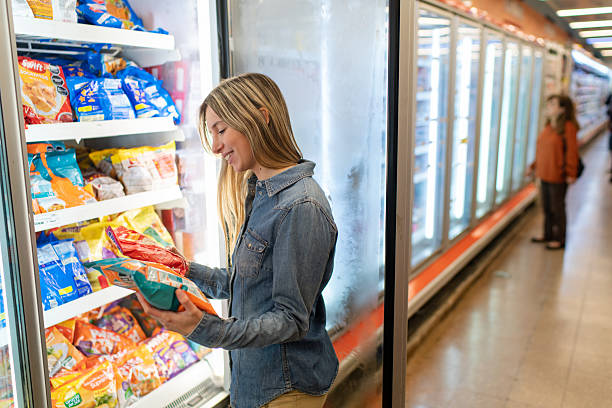
You might wonder, Why can’t I just use a regular polyethylene bag for gefrorenes Essen? The answer lies in the unique challenges of freezing temperatures. Inside a freezer, where temperatures can drop to -18°C (0°F) or lower, regular packaging just doesn’t cut it.
Frozen food packaging must protect against three main threats:
1. Freezer Burn and Dehydration
The most common issue you’ll hear about from consumers is freezer burn. This happens when moisture inside the food turns into gas and escapes, leaving the food dry, tough, and discolored. This process, called sublimation, is a real problem for your frozen products. Um dies zu verhindern, you need packaging with a low water vapor transmission rate (WVTR)—this keeps the moisture locked inside, preserving both texture and flavor.
2. Oxidation and Rancidity
Oxygen can destroy the flavor of frozen foods, especially fatty items like meat or prepared meals with oils. Even frozen fats can begin to oxidize, causing that unpleasant “stale” schmecken. Effective frozen food packaging must provide a strong barrier to oxygen to maintain freshness and prevent rancidity.
3. Physical Durability (Impact Resistance)
Cold temperatures can make materials brittle, so a plastic film that’s strong at room temperature may crack or shatter when frozen. This is a problem during shipping when frozen food bags get tossed around or jostled in trucks. Sharp edges, like the pointed tip of a frozen french fry or the end of a chicken bone, can easily puncture a weak package. That’s why your packaging needs to be tough enough to withstand impact and resist punctures, even in freezing conditions.
By using specialized frozen food packaging, you ensure that your products stay fresh, flavorful, and intact, no matter the conditions inside the freezer.
What Materials Are Used in Frozen Food Packaging?
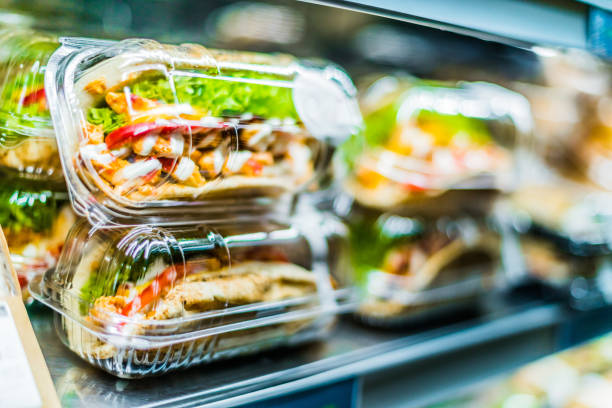
Frozen food packaging materials fall into two broad categories:
- Flexible packaging, such as films and pouches, which is lightweight, kostengünstig, and widely used.
- Rigid or semi-rigid packaging, such as trays or boxes, which provides strong physical protection and better stacking strength.
Understanding the role and behavior of each material helps you select the right type for your product. Let’s go through them one by one.
1. Polyethylen (SPORT)
Polyethylene is the backbone of frozen food flexible packaging. It’s used to make everything from simple bags to complex laminated films.
Why it’s used:
- Highly resistant to moisture, keeping food dry and preventing freezer burn.
- Stays flexible even at very low temperatures (down to about −40°C).
- Can be heat-sealed easily, which is crucial for maintaining airtight packaging.
Variants and applications:
- LDPE (Low-Density PE): Soft, flexibel, used for vegetable bags or inner sealing layers.
- HDPE (High-Density PE): Stiffer, stronger, often used for outer layers or thicker pouches.
Limitation:
Provides a limited oxygen barrier, so not the best choice for foods sensitive to oxidation (like meat or cheese).
Anwendung: You will see this in almost every flexible bag, from frozen berries to vegetable mixes.
2. Polypropylen (PP)
Polypropylene is another common packaging plastic, known for being durable and clear. Jedoch, it becomes brittle under extreme cold, so its role in frozen applications is usually part of a multilayer film.
Why it’s used:
- Excellent clarity and gloss, making the product visible on the shelf.
- Good chemical resistance.
- Cost-effective compared with higher-barrier materials.
Typical structure:
Often combined with LDPE (forming BOPP/LDPE) to get both stiffness and flexibility.
Limitation:
Unmodified PP alone may crack below −20°C, so it’s not used as a standalone film for deep freezing.
Anwendung: Gefrorene Mahlzeiten, Desserts, und Backwaren.
3. Polyethylenterephthalat (HAUSTIER)
PET is a tough, glossy plastic that works well as the outer layer of laminated packaging.
Why it’s used:
- Strong, with high puncture and tear resistance.
- Low oxygen permeability compared to PE and PP.
- Excellent print surface for branding and labeling.
- Maintains dimensional stability under both hot and cold conditions.
Common applications:
Used as the exterior layer in PET/PE laminated pouches or lidding film for trays.
Limitation:
Expensive, and alone it’s too rigid to seal directly—thus usually combined with softer PE.
Anwendung: Ready-to-bake products, frozen vegetables, and meat.
4. Polyamid (Nylon)
Nylon isn’t as flexible as PE or PP, but it is unbeatable for durability. It’s a go-to material when mechanical stress and puncture protection are top priorities.
Why it’s used:
- Very high puncture resistance—great for meat, shellfish, and bone-in products.
- Good oxygen barrier, protecting products from oxidation.
Typical configuration:
Usually laminated with PE (for sealing) or with EVOH (for extra oxygen barrier), forming PA/PE or PA/EVOH/PE multilayer films.
Limitation:
Absorbs moisture over time, which can slightly reduce its barrier properties unless properly laminated.
Anwendung: Frozen meats, Meeresfrüchte, and bone-in products.
5. EVOH (Ethylene Vinyl Alcohol)
EVOH might sound exotic, but it’s the invisible hero in many advanced packaging systems. It’s a specialized barrier layer often placed between other films.
Why it’s used:
- Provides extremely high oxygen barrier—up to 100 times better than standard PE or PP.
- Keeps flavors and aromas fresh for long periods, vital for meat and seafood.
Typical structure:
Always sandwiched between moisture-resistant layers (Z.B., PET/EVOH/PE) because its barrier drops when exposed to humidity.
Limitation:
More expensive than regular polymers and requires multilayer coextrusion or lamination.
Anwendung: Frozen seafood, high-quality meats, and premium frozen meals.
6. Paperboard Composites
Now we move beyond flexible film—into semi-rigid materials. This phrase means packaging that’s not purely soft film but includes board, Tabletts, or boxes made from paper plus protective coatings.
Why it’s used:
- Provides rigidity and stackability—important for pizzas, Fertiggerichte, and multi-pack products.
- Excellent surface for printing logos, menus, or handling instructions.
- Can be combined with plastic film or aluminum foil liners to resist moisture and grease.
Limitation:
Not suitable for direct contact with wet, unpackaged frozen food unless coated or laminated.
Anwendung: Pizzas, Fertiggerichte, multi-pack frozen foods.
7. Aluminum Foil and Metallized Films
Aluminum foil represents the highest barrier level available today. Metallized films offer similar performance but are lighter and cheaper.
Why they’re used:
- Block oxygen, Feuchtigkeit, and light completely.
- Extend product shelf life significantly.
- Preserve color and flavor—ideal for ready-to-bake products and premium pastries.
Metallized options:
- Metallized PET: Reflective look, strong barrier, lower cost than actual foil.
- Aluminum Foil: Nearly zero gas transmission, but less flexible and more expensive.
Limitation:
Difficult to recycle when laminated with plastics; also, foil films can kink easily during filling.
Anwendung: Ready-to-bake products, premium pastries, gefrorene Pizzen, and frozen desserts.
8. Rigid Plastic Trays (HAUSTIER, PP, or CPET)
Rigid trays take “beyond flexible film” a step further—they form Behälter rather than wraps. Used mainly for prepared frozen meals, lasagna, or desserts.
Why they’re used:
- Provide physical protection against crushing and handling damage.
- Support heat-sealing with lidding film for an airtight, tamper-evident pack.
- Some types, like CPET (Crystalline PET), withstand both freezing and oven reheating.
Limitation:
Heavier and more expensive than flexible pouches. Auch, shipping costs rise due to their bulk.
Anwendung: Prepared frozen meals, lasagna, frozen desserts, and microwavable meals.
9. Biodegradable and Recyclable Alternatives
Sustainability is reshaping packaging discussions, even in frozen applications. Materials like compostable PLA (Polymilchsäure) or cellulose-based films are entering the market, although they still face limitations under sub-zero temperatures.
Current solutions:
- PLA (Polymilchsäure): Bio-based but brittle below freezing.
- Mono-material structures (100% PE or PP) for recyclability.
- BOPE (Biaxially Oriented PE) films—clear, stiff, und recycelbar, expected to replace PET in many uses.
- Reduced film thickness through improved coextrusion technologies, cutting material consumption by 10–20%.
Limitation:
Eco-films must continue improving low-temperature toughness to match current performance standards.
Anwendung: Sustainable packaging for frozen foods (Gemüse, meals, Snacks).
How Different Packaging Materials Perform in Freezing Conditions
Below is a comparison table summarizing how major frozen food packaging materials perform across crucial technical factors.
| Material | Temperature Tolerance | Flexibility at −20°C | Nachhaltigkeit | Anwendungen |
|---|---|---|---|---|
| LDPE / HDPE (Polyethylen) | Excellent (up to −40°C) | Very good (retains softness) | Recyclable (mono-PE) | Vegetable and fruit pouches, bulk bags |
| PP (Polypropylen) | Fair (to −20°C) | Limited (can crack) | Recyclable (mono-PP) | Waffles, noodles, Snacks |
| HAUSTIER (Polyethylenterephthalat) | Excellent (wide range) | Fair (rigid at low temp) | Partly recyclable with mono-PET | Lidding films, Stand-up-Beutel |
| Nylon (Polyamid) | Excellent | Good | Limited recyclability | Fleisch, Meeresfrüchte, bone-in packs |
| EVOH (Ethylene Vinyl Alcohol) | Excellent | Flexible within laminates | Not recyclable alone | High-barrier laminated pouches |
| Paperboard Composites | Good for secondary packaging | Rigid | Partly recyclable (with PE coating) | Pizza boxes, meal sleeves |
| Aluminum Foil / Metallized Films | Excellent (handles extremes) | Folie: rigid / Metallized film: flexibel | Poor recyclability (multi-layer) | Pastries, Backwaren, premium foods |
| Rigid PET / PP / CPET Trays | Outstanding | Rigid | Recyclable (mono-structure) | Fertiggerichte, lasagna, Desserts |
| Biodegradable / Recyclable Plastics (PLA, BOPE, usw.) | Fair (PLA brittle below −10°C; BOPE stable) | Variable | Excellent for recycling or composting | Eco-friendly frozen products, Snacks |
Key Insights from the Comparison
- LDPE and HDPE remain the most versatile and economical materials for flexible frozen packaging. They resist cracking, seal easily, and are widely recyclable.
- PET and nylon laminates provide high mechanical strength for meats or heavier goods, though they add cost and reduce flexibility.
- EVOH delivers the best oxygen barrier and is typically used as a thin middle layer in multilayer structures.
- Aluminum and metallized films are unbeatable in barrier strength but less environmentally friendly and harder to recycle.
- Paperboard composites and rigid trays move beyond flexible film, offering structure and stackability for retail-ready meals.
- Sustainable options like BOPE and mono-PP films are emerging as realistic alternatives, though still in ongoing optimization for low-temperature toughness.
What to Consider When Choosing Frozen Food Packaging
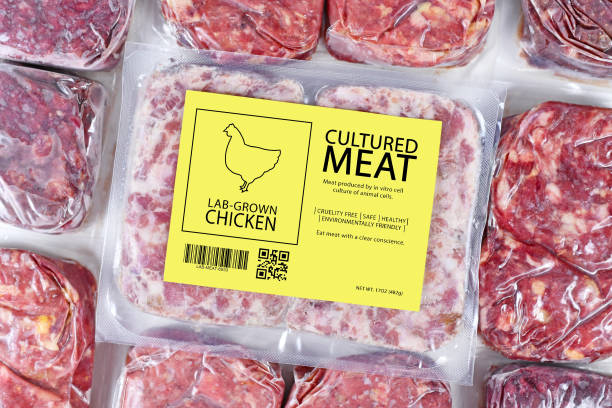
If you are launching a new frozen product or upgrading your current line, do not just buy the cheapest film. That is a recipe for disaster. You need to balance three elements: Produktschutz, Machinability, and Sustainability.
Here is a checklist from an equipment manufacturer’s perspective.
The Barrier Requirements (OTR and WVTR)
You must match the barrier to the food.
- Gemüse: They are mostly water. They need a good moisture barrier (WVTR) to prevent dehydration. Jedoch, they are less sensitive to oxygen. A standard PE/PE or BOPP/PE structure is usually fine.
- Meats and Fatty Foods: These are sensitive. Oxygen causes fat oxidation. You need a “high barrier” Film, likely incorporating EVOH (Ethylene Vinyl Alcohol) or a metallized layer. If you skimp here, your product will taste stale within weeks.
- Sharpness: If you are packaging bone-in chicken or shelled mussels, barrier numbers don’t matter if the bone pokes a hole in the bag. You need a thick, puncture-resistant laminate, usually involving Nylon (PA) for toughness.
Machinability: Will it Run?
This is where many businesses fail. They buy a film that looks good but causes jams on the production line.
- COF (Coefficient of Friction): The film needs to slide over the forming collar of the machine. If the COF is too high, it drags and snaps. If it is too low, it slips, and the print alignment gets messed up.
- Sealing Window: You want a material that seals well across a range of temperatures. If a material only seals at exactly 140°C, and your factory floor temperature fluctuates, you will get weak seals. A wide sealing window (Z.B., seals well between 130°C and 160°C) allows for faster production speeds and fewer errors.
- Stiffness: If you are using a VFFS machine, the film needs enough stiffness to form a tube. If it is too limp, it wrinkles, leading to “leakers” (unsealed gaps).
User Experience and Convenience
Think about the end-user taking this out of their freezer.
- Resealability: For multi-serve products (like a 1kg bag of chicken nuggets), a zipper is mandatory. If the customer cannot reseal the bag, the remaining food gets freezer-burned. They will blame your brand, not their freezer.
- Easy-Peel vs. Destructive Seal: For tray lidding, do you want the film to peel off cleanly? Or should it weld tightly, requiring a knife to open? This depends on safety requirements and convenience.
The Sustainability Shift
The industry is moving away from complex laminates (like PET/Alu/PE) because they are hard to recycle. The layers cannot be easily separated.
- The Trend: Mono-material structures (PE/PE) are the future. They are fully recyclable.
- The Catch: As mentioned earlier, they are harder to run on older machines. They stretch more easily under heat. If you plan to switch to sustainable films, ensure your packaging machinery is equipped with precise temperature controls and tension systems to handle them.
Letzte Gedanken
Commercial frozen food packaging is evolving rapidly. The market now values recyclability, improved visual appeal, and cost-effective automation. Whether you work with polyethylene, HAUSTIER, or eco-friendly alternatives, the goal remains stable: deliver safe, fresh-looking, and perfectly preserved frozen food to customers everywhere.
At CHLB, we provide high-quality food packaging machines that cater to a variety of food products, including frozen foods. With a broad range of solutions tailored to meet different packaging needs, we can help optimize your packaging process.
Ready to enhance your packaging solutions?
Kontaktieren Sie uns noch heute to learn how CHLB’s innovative machines can support your business and improve your food packaging efficiency.